Nárcisz Panzió
Tourist attraction
Church of ªumuleu Ciuc
The area and the Roman Catholic Church of Sumuleu Ciuc is an old pilgrimage place for Christians from all around the world since the XVth century.
Since 1567 there is a traditional Whitsuntide pilgrimage, which is also the most important Christian event for szeklers.
The highlight of this pilgrimage is the Saturday noon holy mass, which is held on Sumuleu Mic, which is named by the locals, the Mountain of Jesus.
This holy mass is usually attended by hundreds of thousands of Christians from all around the world.
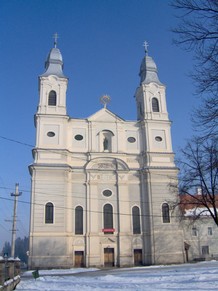


The Memorial of Siculeni
The Memorial was built in the memory of over 400 masacred szeklers, in 1663 ordered by Maria Theresia.
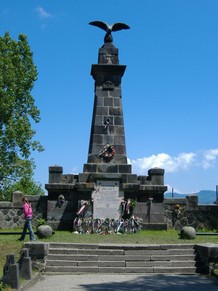
Ghimes
In this area you can experience the unique culture and habbits of the Csango people.
The valley of Ghimes, surrounded by beautiful scenery, is the home of this minority of Romania. In the village of Ghimes Faget (Gyimesbükk), you can find the last eastern border point of the Austro-Hungarian Empire.
The Lázár Castle in Lazarea (Szárhegy)
The castle is the most beautiful spot of the Gheorgheni arhipelago, constantly renovated but opened for the public permanently.
Its fame is due to the fact that the Transylvanian prince Bethlen Gábor spent his childhood here. The castle gives place to a permanent exhibition of fine arts, as well as it is the place of several cultural programs.
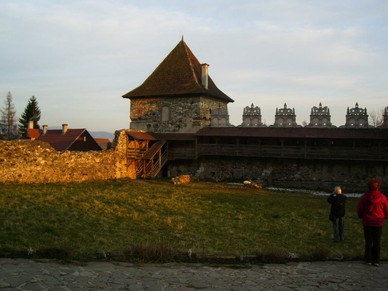
Red Lake and Bicaz Straits
The Red Lake (Lacu Rosu) is a natural storage dam lake and is situated at the foot of Ha~smasu Mare Mountains, near the town of Gheorgheni. It is the largest natural mountain lake in Romania.
The name of "Lacul Rosu" (Red Lake) comes from the reddish alluvia deposited in the lake by the Red Creek.
Because the Suhardu Mic Mountain had a purple reflection in the lake and the reddish limy alluvia brought by the Red Creek, the shepherds stared to call it The Red Lake (Lacu Rosu).
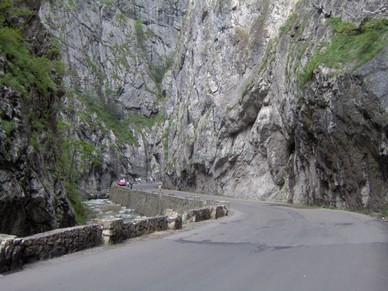
Downstream the Red Lake, you can see the Bicaz Canyon, which is dug by the Bicaz river waters and serves as a passageway between Transylvania and Moldavia.area is part of the “Bicaz Canyon” National Park, which includes actually the following protected areas: The Red Lake, the Bicaz Canyon and the Ha~smasu Mare Mountain.
Harghita Bath
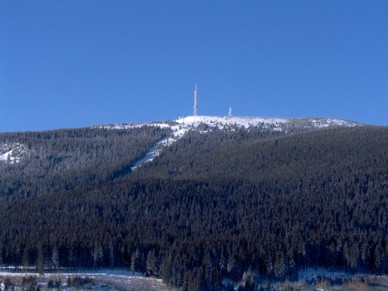
Situated at the altitude of 1350 m in the Hargita Mountains, is a barely used and almost forgotten bath and spa resort.
The mofets, (natural carbon dioxide emanations) found here, are used only in summertime, being recommended for cardio-vascular treatments.
Stimulative and tonic bioclimate, cool in summer and cold in winter, with a lot of snow, the mineral water springs, make this place unique.
Corund, Praid, Sovata
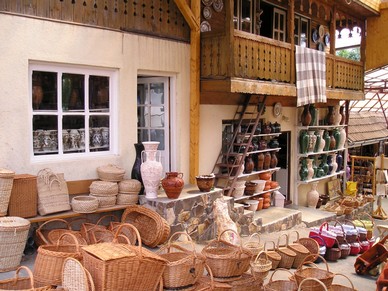
Corund (Korond), is the Transylvanian center of pottery, part of the village's life which is inherited from father to son.
This place is a positive example of the developing szekler village, keeping its traditions, simply relying on pottery and traditional arts.
In Praid (Parajd), you find the famous Salt Mine, known and exploited since roman times.In the mine there is a treatment facility for respiratory diseases, such as asthma, bronchitis and allergies.
On the occasion of the artistic camps, organised once a year, the works of the sculptors and painters decorate the walls of the treatment centre.
Sovata is a balneo-climateric centre, famous and well known across Europe.
Formed in 1875, this lake is the only one in Europe and is the largest heliothermal lake of the world. Because of the heliothermic phenomenon, the temperature of water increases quickly with the depth.Treats successfully rheumatic and ginecologic diseases.
St. Ann Lake
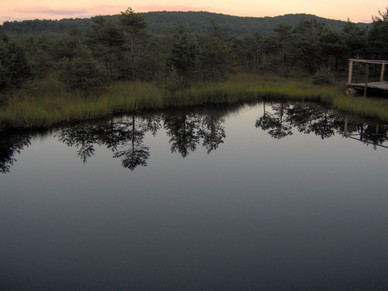
Lake St.Ann, a lake formed in the crater of an extinct volcano, is one of Europe’s greatest natural wonders. Surrounded on every side by lush green forest, sprouting from rich volcanic soil, the lake is the perfect place to go for a walk, a swim or even a row in one of the boats for hire.
The ruins of the Bálványos Castle are at 45 minutes distance of the Bálványos bath, situated on 1029 m high hilltop. It was the property of the Apor family and many legends are told about it.
The 20 m tall bastion was ruined during the earthquake of 1970.
Other tourist attraction
- the frescos in the church of Racu (Rákos)
- the grave of Zöld Péter in Racu (Rákos)
- the memorial house of Tamási Áron in Lupeni (Farkaslaka)
- the memorial house of Benedek Elek in Ba~?anii Mici (Kisbacon)
- the Gábor Áron Memorial in Tîrgu Secuiesc (Kézdivásárhely)
- the Kászon region